
Child Marriage in Bangladesh: Law, Reality, and the Case of a “Star Kid”
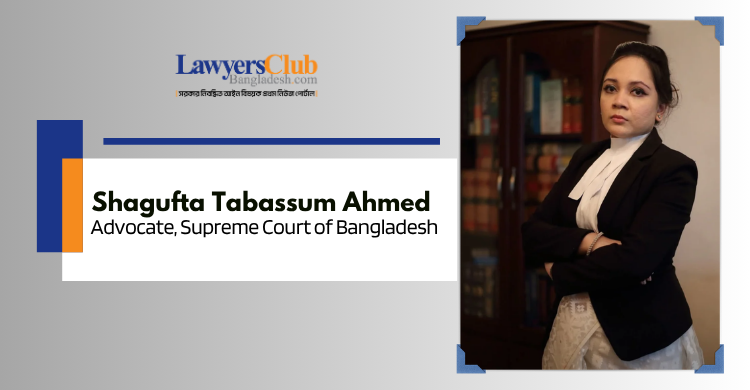
Shagufta Tabassum Ahmed : A recent incident involving a teenage “star kid” has once again brought a painful reality into public discussion—child marriage still exists in our society, despite clear legal prohibitions.
Marriage at the age of sixteen is not simply the start of a marital relationship; it often marks the end of a girl’s childhood. At such a young age, marriage can interrupt education, harm physical and mental health, and deprive a girl of the opportunity to build an independent future.
In many instances, cultural or religious arguments are invoked to justify early marriage. However, Islamic principles emphasize maturity, responsibility, and the physical and psychological capability of both partners before entering into marriage. Islam does not endorse harm, coercion, or injustice. In the contemporary context, early marriage exposes girls to serious physical, emotional, and social risks.
The Consequences of Child Marriage
Health Risks : Early pregnancy significantly increases the risk of maternal and infant mortality. Young mothers often face malnutrition, anemia, complications during childbirth, and long-term health problems.
Psychological and Emotional Impact : Adolescents who are not mentally prepared for marital responsibilities may experience anxiety, fear, depression, and long-term psychological distress.
Disruption of Education : Child marriage frequently forces girls to abandon their education, limiting their ability to become economically independent and reducing their future opportunities.
Risk of Domestic Violence and Marital Instability : Marriages formed at an immature age often lack emotional balance and mutual understanding, increasing the likelihood of domestic violence and marital breakdown.
Perpetuation of Poverty : When girls are denied education and employment opportunities, families and communities remain trapped in cycles of poverty and social inequality.
Legal Framework in Bangladesh
Under the Child Marriage Restraint Act, 2017, child marriage is a punishable offence. The law defines child marriage as any marriage where the bride is under 18 years or the groom is under 21 years.
The Act criminalizes:
• Arranging or facilitating the marriage of a minor
• Providing false information regarding age
• Performing or registering such marriages
Penalties may include imprisonment, fines, or both. A marriage registrar (Kazi) knowingly conducting such a marriage may also face license cancellation.
However, Section 19 introduces a controversial “special circumstances” exception, where a minor’s marriage may be permitted only if:
• it is in the best interest of the child,
• there is parental or guardian consent, and
• it is approved by a competent court.
Importantly, this provision does not create a general right to marry at 16—it requires strict judicial scrutiny. The phrase “best interest” is the decisive legal test.
Judicial Interpretation of “Best Interest of the Child”
Bangladeshi courts have consistently held that the welfare of the child is paramount.
In Abu Bakar Siddique v. S.M.A. Bakar, 38 DLR (AD) 106, the Appellate Division held that:
The welfare of the child is the supreme consideration in all matters relating to minors.
In Bangladesh National Women Lawyers’ Association v. Government of Bangladesh, 60 DLR (HCD) 660, the High Court Division emphasized the State’s constitutional duty to protect women and children from harmful social practices and ensure their dignity and development.
Further, in BLAST v. Bangladesh, 55 DLR (HCD) 363, the Court stressed that constitutional protections must be interpreted broadly to safeguard the rights of vulnerable groups, especially children.
Meaning in Practice
From these decisions, it is clear that “best interest of the child” requires courts to consider:
• Physical and mental health
• Education and future opportunities
• Protection from exploitation and abuse
• Long-term dignity and development
A marriage at 16 years of age would rarely, if ever, satisfy this test, as it typically disrupts education, increases health risks, and exposes the child to long-term vulnerability.
Conclusion
The incident involving this “star kid” should serve as a wake-up call for society. Child marriage is not merely a legal violation; it is a denial of a child’s fundamental rights to education, safety, dignity, and personal development.
The law under Section 19 may allow narrow exceptions, but the judiciary has made it clear that the best interest of the child is the controlling standard, not social pressure or parental consent.
Every child deserves the opportunity to experience a secure childhood and grow into adulthood with education, confidence, and independence.
Preventing child marriage is not only a legal obligation—it is a moral and constitutional responsibility.
Stopping one child marriage means protecting a life, a dream, and a future.
Author : Shagufta Tabassum Ahmed is an Advocate, Supreme Court of Bangladesh