
Journalism, Responsibility, and the Questions We Must Ask
Journalism is not merely a profession; rather, it is a public trust. Like the medicine and law disciplines, it demands high ethical standards and accountability. As it is closely connected with the mass people Journalists are bound by a professional oath, as stated in the Code of Conduct for Journalists enacted under Section 11(b) of the Press Council Act, 1974. Every journalist is expected to read and sign the oath administered by the concerned editors. Nonetheless, many remain unaware of its existence, and even fewer adhere to its principles.
A recent tragedy that occurred in Rajshahi has reignited questions about responsible journalism. Following the murder of a judge’s child and the critical injury of his wife, the accused’s statement, which was recorded in police custody, was irresponsibly circulated by several media outlets. When the dead body of the judge’s kid was in the mortuary and the wife was struggling with its grievous injury, the statement, laced with victim-blaming, was disseminated without regard for ethics, empathy, or legality.
In developed jurisdictions, the identity of victims in violent crimes is protected. Bangladesh, too, prohibits such disclosures under several laws, including the Women and Children Repression Prevention Act, 2000. Yet, in this case, law enforcement agencies themselves facilitated media access to the accused, enabling a form of “media trial” that is neither legally sanctioned nor ethically defensible. The high court of the Bangladesh Supreme Court explicitly warns against such practices in Ayesha Siddhika Minni vs. The State, reported in 39 BLD 470.
Also Read : Triumph of Law Over Politics: Supreme Court’s Stand on Zia Orphanage Malicious Prosecution
Journalists may collect news from various sources, but they must operate within ethical boundaries. An accused who is in the custody of a law-enforcing agency has no legal right to publicise his narrative. There is no instance of that in a civilised state. Publishing scandalously charged stories, especially those accompanied by images of woman victims, violates multiple provisions of the Code of Conduct (Rules 13, 16, and 23). Moreover, disseminating sub judice material that could influence judicial proceedings is not just unethical – it is unlawful.
What’s more concerning is the media’s failure to highlight the systemic reluctances that preceded the tragedy. A week before the fatal incident, the victim had filed a General Diary (GD) in Sylhet, citing death threats from the accused person. On the day of the occurrence, she visited a police station in Rajshahi to reiterate her concerns. Yet, this context was largely ignored in the news coverage. Instead of holding institutions accountable to the law-enforcing agency, the media chose sensationalism in the news, mixing the scandalous story of victim blaming, collecting from the accused only.
In today’s digital age, journalism spans both offline and online platforms. The expansion of media must be matched by a commitment to professional standards. The new Press Accreditation Policy 2025 has rules for punishing anyone who breaks the Code of Conduct. It is now crucial for the Press Council to apply these rules and mandate professional training for journalists to uplift the standards of journalism. Press freedom is crucial, yet it must coexist with responsibility. Without keeping the ethical rigour, journalism risks becoming a tool of harm rather than a force for truth.
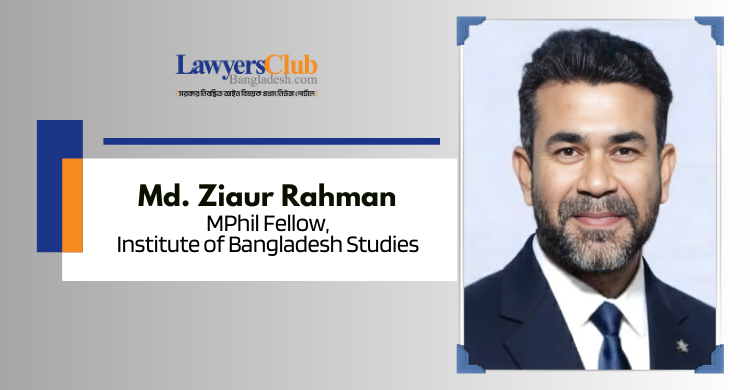
Author Md. Ziaur Rahman is a MPhil Fellow, Institute of Bangladesh Studies.