
Revisiting the 1951 Refugee Convention in a Changing Global Context
Preliminary Discourse
The phenomenon of refugees is as old as the history of human civilization and the history of human civilization reflects the gradual development from prehistoric period when humans lives as hunters and hoarders. Back then the concept of ‘border’ or ‘territorial boundary’ did not exist, but human being used to flee from one place to other to save their lives due to the natural climate causes. When the human learnt about the need of community living, they fashioned the primitive society and day to day turned it to complex social, religious, political, geographical and economic society.
Following that in ancient time humans formed the dynasty, kingdom and empire with territorial boundaries and they were engaged expanding boundaries by conquering the other’s kingdom that led the people cause expelled or forced to migrate. In mediaeval era religious persecution became a major cause of forced migration and displacement.
Also Read : Constitutional Framework of Emergency Provisions and Curfew in Bangladesh
In modern era human kind witnessed the unprecedented level of massive refugee movements due to religious war, colonial expansion and showing competition of power. For example, WW-I & II caused millions of people to flee their homes across Europe and the Middle East. Throughout this history, people had been forced to flee from their usual resident to save their lives and property due to war, persecution, famine, religious belief and conflict or natural disasters.
Following the WW-I & II, due to massive displacement crisis in Europe the UN responded the need for international protection for the displaced people. In that response in 1948 the UNESC by an Ad Hoc Committee who took the burden for drafting a convention for the legal protection of refugees and the text for the ‘Convention relating to the Status of Refugee and Stateless Persons’ was finalized and adopted in between 2 to 25 of July, 1951 by the UN General Assembly summoning a special conference of plenipotentiaries in Geneva. At that interval in 1950 the UNHC was established to act as the guardian for the refugees.
Limitation to the Definition of ‘Refugee’
The Convention defines the clear and international legal definition of ‘Refugee’. It also establishes the cornerstone principle of ‘Non-refoulment’ and enshrined the rights and standard for the treatment of the refugees. Reading the ‘Preamble’ and the expression of the Convention evidently it is understood that initially the convention was designed as a temporary solution to the post-war crisis to the limited individuals who become refugees before 1st January, 1951 in Europe.
Article-1, Section-A of the convention where the term of the ‘Refugee’ defined enunciated that for the purposes of the present convention, the term ‘Refugee’ shall apply to any person who has been considered as refugee under the arrangement of:-
- Arrangement relating to the legal status of Russian and Armenian refugees; and
- The events occurring before 1st January 1951 which shall be understood to mean events in Europe before 1st January 1951.
Although, these limitations was removed by adopting the additional protocol in 1967 the Protocol relating the Status of Refugees. But, still the definition of ‘Refugee’ in that vary convention reflect the European Political Experiences i.e. the persecution under fascist or communist regimes in Europe.
Also Read : Child Marriage in Bangladesh: Law, Reality, and the Case of a “Star Kid”
Besides this Article 1(A)(2) of the 1951 Convention specified that a refugee is someone who has a well-founded fear of persecution based on race, religion, nationality, membership of a particular social group and political opinion. This definition excluded some of global contemporary issues which fact the massive displacement such as:-
- Climate refugee: displacement due to environmental disaster or climate change;
- Economic migrants: due to severe poverty or economic collapse individuals forced to move;
- Generalized violence: being victimized forced to displace due to civil war or armed conflict.
These three categories of causes which were not identified by the Convention do not face direct targeted persecution. Therefore, well-founded fear of persecution to come under the status of refugee does not meet all the categories of causes that cause the people refugee. Reasons behind it, the draftsman of that time did not think about these causes, because these were not known by the Europeans. Due to not identifying the other contemporary issues many displaced populations remain outside the 1951 Convention’s protection and framework.
Incorporation of the European Administrative and Legal System
Since this 1951 Convention was drafted aftermath the WW-II when the primary issues were the displaced people in Europe, the Convention largely reflects the European legal and administrative system and tradition. The Convention adopted some legal concepts, administrative mechanisms and institutional approaches which are very familiar with the European system.
For example, the system and procedures of asylum, documentation and identity papers, and welfare and rights structures are the unique which are commonly based on the European system. Though, the issue of refugee is the global problem particularly when refugee crisis in Asia, Africa and Middle East concern, the Convention somewhat in Eurocentric in structure and application marks it less suited to their realities.
Under the framework of the 1951 Convention anyone seeking protection is generally required to submit a formal application providing all evidences supporting the well-founded fear of persecution and he/she must undergo assessment by the competent authorities of the host country. This procedure and structure commonly found in European administrative system. Thus, many critics argue that the refugee determination procedures under the framework of the 1951 Convention reflect the system of European legal context rather than for diverse global realities.
Narrow Scope of 1951 Convention
Since the 1951 Convention is limited to identifying the global contemporary issues other than the European geographical area many of regional authority and instrument have been adopted and developed recognizing these 1951 Convention’s limitation. For example:-
- 1969 OAU Convention Governing the Specific Aspects of Refugee Problems in Africa includes people fleeing external aggression, occupation, foreign domination, or events seriously disturbing public order will be considered as refugee; and
- 1984 Cartegena Declaratio of Refugees in Latin America expanded the definition of refugee to include people fleeing generalized violence, internal conflict, massive human rights violation, and public order disturbance.
Like these two many other Regions has introduced their refugee instrument expanding and including the causes for refugee going beyond the narrow scope of the 1951 Convention.
Concluding Remarks
However, in many parts of the country including the Bangladesh where large number of displaced people arrive suddenly, it becomes very difficult to implement for the host country; irrespectively whether they are signatories of not; to follow a formal and individualized procedure set out by the 1951 Eurocentric Convention, to offer protection to the displaced people due to their regional condition and sovereign nature. In many statistics Analysts showed that the number of displaced people has exceeded 110 million worldwide in recent years where many of them do not come within the definition of the 1951 Convention, highlighting the inadequacy of the existing framework of the Convention even after adoption of its Protocol.
Undeniably it is true that the 1951 Convention was followed by the European historical circumstances containing the geographical and temporal limitations. Although, 1967 Protocol removed the geographical restrictions and make it a global instrument, the definition of refugee remains relatively narrow in addressing the modern causes of displacement. To accommodate the evolving global realities it is crying need for reforming legal reform or supplementary framework to bring the displaced people under one umbrella 1951 Convention.
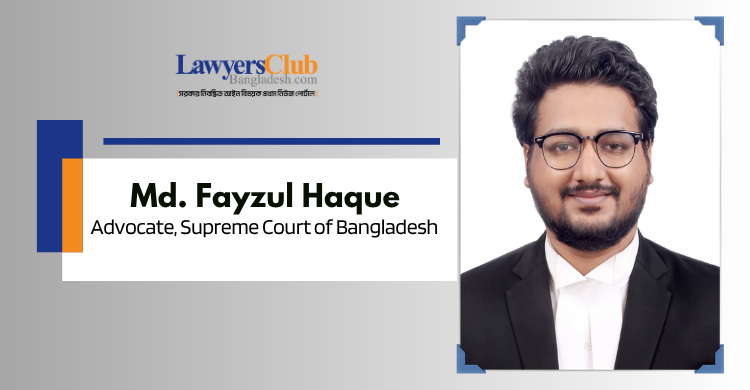
Author Md. Fayzul Haque; LL.B (Hon’s), LL.M, LL.M (UMSAILS in Course), MHSS (Human Rights), SAF Scholar, Advocate, High Court Division of the Bangladesh Supreme Court.